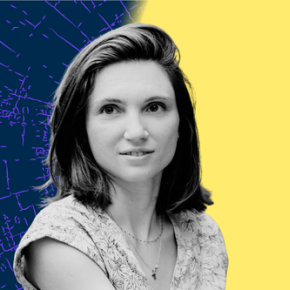
2025 Amies Prize | Margaux Zaffran: predicting electricity prices using mathematics
The Maths Enterprises & Society Thesis Prize was created in 2013 by Amies to promote mathematics theses carried out in part in collaboration with a socio-economic partner and having direct benefits for that partner.
Sponsored by the learned societies Société Française de Statistique (SFDS), Société de Mathématiques Appliquées et Industrielles (SMAI), and Société Mathématique de France (SMF), the 2025 thesis prize was awarded during the 14th edition of the Forum Entreprises & Mathématiques on Tuesday, October 7, 2025.
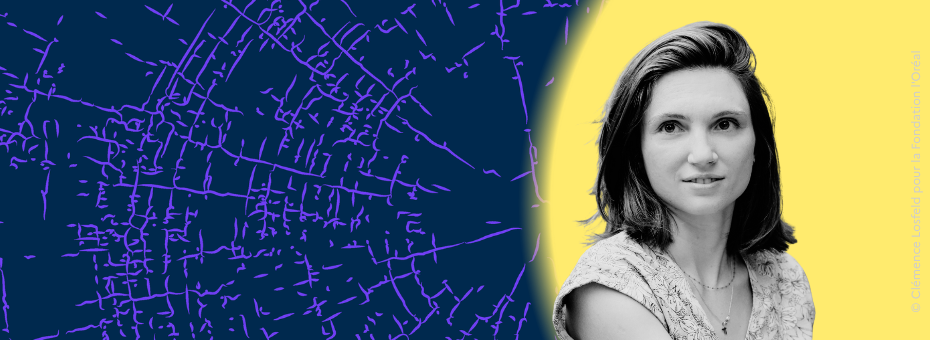
- Thesis title: Post-hoc quantification of predictive uncertainty: methods with applications to electricity price forecasting
- University of issuance: Institut Polytechnique de Paris
- Thesis supervisors: Aymeric Dieuleveut, CMAP, École Polytechnique, and Julie Josse, Inria (PreMeDICaL team)
- Industrial supervisors: Olivier Féron and Yannig Goude
- Company: EDF R&D
- Currently: Postdoctoral researcher at the Laboratoire de Mathématiques d’Orsay
What motivated you to write a thesis related to the socio-economic world?
I really enjoyed the theoretical aspect of my academic studies and wanted to continue exploring this area by writing a thesis. However, my previous internship experiences had shown me that it was essential for me to know that my research would be motivated by concrete applications in the socio-economic world. That's why I decided to consider a CIFRE thesis. I also really wanted to work with a company that shared my values and goals. Doing a thesis with EDF was the perfect fit for me!
Can you tell us about your thesis topic?
My thesis work is motivated by the need for accurate forecasts of electricity market prices—the exchange price between producers and suppliers—as well as probabilistic forecasts of these prices. Unlike a point forecast (i.e., tomorrow's price will be $45/MWh), a probabilistic forecast seeks to capture the uncertainty of the quantity to be forecast (for example, there is a 90% chance that tomorrow's price will be between $40 and $50/MWh). Being able to forecast these prices accurately and robustly (i.e., probabilistic forecasting) would stabilize energy production planning and thus reduce associated carbon emissions.
What were the main challenges you encountered during your research?
If I had to name just one, I think I would say the skills needed to collaborate simultaneously with many people who speak different languages. During my thesis, I had to act as a bridge between the four people who supervised me. At the center of this wonderful team of five, I was ultimately responsible for synthesizing and reconciling the scientific interests of each member, which were sometimes more theoretical, more methodological, or more applied, and always expressed in a different language reflecting their diverse research profiles, even though on the surface it was always mathematical French. This challenge showed me how much collaboration, particularly between research and industry, but not only, requires a specific skill, somewhat similar to multilingualism equipped with real-time scientific “translation.” I think this is a skill that needs to be consolidated over a much longer period than the three years I had during my thesis, and I am delighted to have been able to start building the foundations!
How has your work benefited the socio-economic world today, or how will it benefit it in the future?
The main practical application of my research is forecasting electricity market prices. However, the methods I develop are not specific to this application, and thanks to their versatility, they have been implemented in EDF's R&D testing platform, where they are used to quantify the real-time uncertainty of many of their models, such as those forecasting electricity consumption. More generally, these methods are also necessary in any sensitive application (such as medical diagnosis or climate modeling) where quantifying model uncertainty is essential to avoid using a corrupted model. Thus, in addition to its relevance to the field of energy management, the analysis of these procedures would be beneficial for a wider range of real-world applications. For example, our latest work has been tested, in collaboration with Traumabase, to predict (with confidence!) whether a trauma patient being treated in an ambulance will suffer hemorrhagic shock once transferred to the hospital.
What advice would you give to young people who want to focus their mathematics research on practical applications?
First, never doubt that mathematics is present in (almost?) all practical applications imaginable. And that's what makes it so beautiful: with a background in mathematics, we can then focus our research on (almost) any practical application and thus work on practical questions that motivate us personally, each of us according to our own interests. And then to be attentive to the balance between theory and application that fulfills us: it varies from person to person, of course, but also with the period and personal context in which we find ourselves. The great thing is that we can adjust it regularly. But to do that, we need to be surrounded by the right people, so my final piece of advice (which is generally valid, by the way!) is to choose carefully the companies, as well as the people, with whom we collaborate.
How do you see the role of mathematics in solving current societal issues?
Society's perception of mathematics, which includes logical reasoning, has a very significant influence on society itself. This is something that has always struck me, and which takes on a sadly different meaning and significance today. It is in middle school mathematics classes, for example, that citizens' logical reasoning skills are traditionally developed. And this has a direct impact on the evolution and decisions we make as a community. I find that this link between mathematics and “reasoning on a daily basis, in society, in my relationships, in my relationship with the world” is rarely highlighted, which is a shame because it might have a greater impact on students and could help demystify “the usefulness of Pythagoras' theorem in everyday life,” in addition to actively contributing to the development of critical and reasoned thinking in future generations.
What are your plans for the future?
During my CIFRE thesis, I realized that I saw myself more as an academic researcher collaborating with the socio-economic world, rather than the other way around. That's one of the strengths of the CIFRE thesis: it allowed me to compare, even if only a little, the two daily routines (with the caveat that the daily routines I observed correspond to specific teams, of course) and to determine what, purely personally, appealed to me the most. So I continued in academia as a postdoctoral researcher. I hope one day to become a researcher, or a teacher-researcher, and develop a research project that interacts strongly with the socio-economic world!