
The Ibni Prize: a lasting commitment to mathematics in Africa
Created in tribute to the Chadian mathematician and politician Ibni Oumar Mahamat Saleh, who died in 2008, the Ibni Prize has been supporting training and research in mathematics in Africa for more than 15 years. Sponsored by the three French mathematical societies and supported by several international partners, it is awarded every two years to two promising young mathematicians.
History of the Ibni Prize
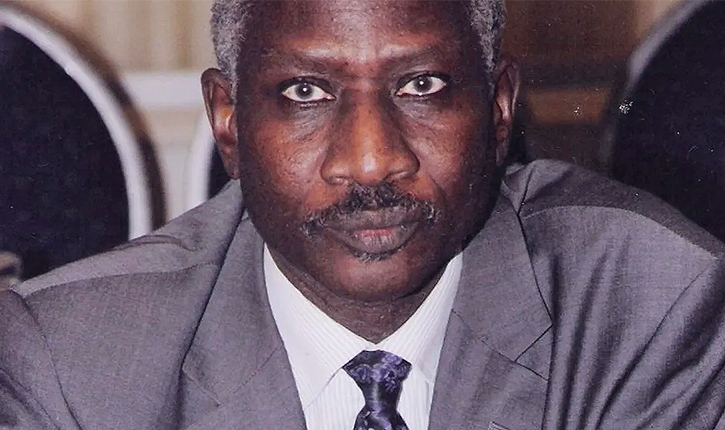
On February 3, 2008, Ibni Oumar Mahamat Saleh, a Chadian mathematician and politician, was abducted from his home in N'Djamena by armed forces. The Ibni Prize was created to honor the memory of the mathematician and continue his commitment to quality mathematics education in Africa. It is awarded by an independent jury to young mathematicians from Central or West Africa, annually from 2010 to 2016, then every two years to two recipients since 2018.
Ibni Oumar Mahamat Saleh studied at the University of Orleans, where he defended a thesis in mathematics in 1983 under the supervision of François Combes. His death in 2008 caused great sadness within the French mathematical community, particularly among colleagues developing scientific collaborations with Africa. Aline Bonami and Marie-Françoise Roy played a pioneering role in launching the Ibni Prize and its initial management, with the assistance of Jean Renault. Marc Peigné then took over, after serving as president of the SMF, and was joined by Jean-Philippe Anker, which helped to further anchor the Ibni Prize in the Denis Poisson Institute. Together with Michael Ruzhansky, who has extensive international experience, particularly in emerging countries, they currently form a trio responsible for the financial management of the Ibni Prize, as well as all communication and coordination activities, such as subscription and the organization of research stays.
The Ibni Prize is sponsored by three French mathematical societies: the Société Française de Statistique, the Société de Mathématiques Appliquées et Industrielles, and the Société Mathématique de France. It also receives support from the African Mathematical Union, the International Center for Pure and Applied Mathematics, the Institut Denis Poisson, the International Mathematical Union, and the London Mathematical Society.
The prize itself is funded by individual donations, as well as occasional institutional donations, for example from the AFRIMath network and the Fondation Sciences Mathématiques de Paris. The research stays of the winners are funded by ongoing contributions from the International Center for Pure and Applied Mathematics, the Institut Denis Poisson, and occasional contributions from the host laboratories.
Objectives
The aim is to continue Ibni Oumar Mahamat Saleh's commitment to providing high-quality training for young mathematicians in Central and West Africa, specifically in the following countries: Benin, Burkina Faso, Burundi, Cameroon, Cape Verde, Côte d'Ivoire, Gabon, Gambia, Ghana, Guinea, Guinea-Bissau, Equatorial Guinea, Liberia, Mali, Mauritania, Niger, Nigeria, Central African Republic, Democratic Republic of Congo, Republic of Congo, Rwanda, Sao Tome and Principe, Senegal, Sierra Leone, Chad, and Togo.
The two winners are selected every two years by an independent jury, which will be chaired in 2026 by Annie Raoult. Each recipient receives a sum of money, the result of a subscription set up more than 16 years ago. Recipients of the prize are strongly encouraged to undertake a research internship in France, Europe, or even another country in agreement with the prize organizers. The award organizers assist them in all the necessary arrangements: airfare is reimbursed by CIMPA, the Denis Poisson Institute contributes to accommodation costs in France, and the host laboratories and award organizers are asked to cover the remaining costs of the scientific stay. For its part, the Ghent Analysis & PDE Center can cover a large part of the travel and accommodation costs of the winners in Ghent.
Additional information
A petition from the international mathematical community following his death, initiated by the three French learned societies SFdS, SMAI, and SMF and launched in 2008, gathered more than 3,500 signatures. An open letter was also circulated three years after the death of Ibni Oumar Mahamat Saleh. Every year on February 3, the anniversary of his death, a message is sent by the organizers of the Ibni Prize and an opinion piece, written by Charles Boubel, is posted on the website Images des mathématiques.
It should be noted that individual donations are gradually declining, particularly with generational changes and the passing of colleagues who strongly supported the prize in its early days.
After more than 15 years of existence and as many recipients, it can be said that the prize has gradually carved out a place for itself in the African mathematical landscape. It has helped young mathematicians in the early stages of their academic careers and in the development of their international collaborations. It is therefore important to ensure its sustainability and greater visibility.
An association of Ibni Prize winners is currently being set up. Its aim is to serve as a forum for exchanges and feedback, as well as testimonials and advice for the development and wider dissemination of this prize.
Interested?
- Discover the call for applications for the 2026 Ibni Prize