

72 women scientists, including 11 exceptional mathematicians, will soon be featured on the Eiffel Tower!
On 2026 International Day of Women and Girls in Science, CNRS Mathematics celebrates this historic step forward for the visibility of women in science. Thanks to everyone's commitment, this initiative helps promote gender equality in mathematics and research. Discover these inspiring figures who are making history.
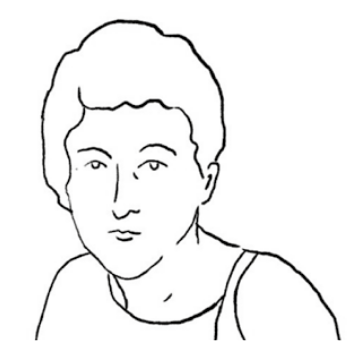
| Yvette Amice (1936–1993) A specialist in number theory and ultrametric analysis, Yvette Amice was a professor at numerous French universities. Her work focused on p-adic analysis and p-adic L-functions, contributing to the advancement of a central topic in number theory. Among other things, she chaired the Société mathématique de France (SMF) and participated in the creation of the Centre international de rencontres mathématiques (Cirm) in Luminy (Marseille). |
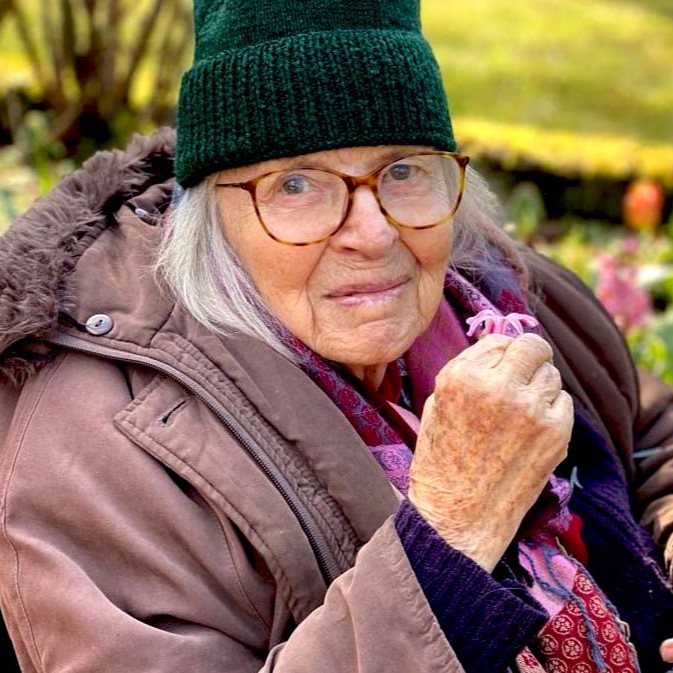
| Yvonne Choquet-Bruhat (1923-2025) French physicist and mathematician, pioneer in the study of Einstein's equations. She demonstrated the existence of global solutions for these equations, paving the way for modern general relativity. She received the CNRS Silver Medal in 1958 and was the first woman elected to theAcadémie des sciences in 1979. |
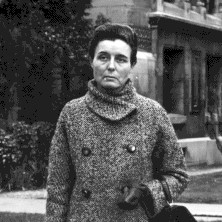
| Jacqueline Ferrand (1918–2014) Mathematician specializing in algebraic geometry and number theory. Her work comprises around a hundred articles and led her to discover an invariant that would later bear her name. As a preparatory teacher at the École Normale Supérieure de Sèvres (known as the École Normale Supérieure for girls), she was, among other things, responsible for developing mathematics teaching to bring it up to the same level as that of boys. |

| Sophie Germain (1776–1831) Self-taught, Sophie Germain made her mark on the history of mathematics with her work on number theory and elasticity. Despite the obstacles associated with her gender, she corresponded with Gauss and Legendre, and her name is associated with a type of prime number. |

| Geneviève Guitel (1895–1982) Mathematician and historian of mathematics, she is known for being the first scientist to discuss long and short scales in Histoire comparée des numérations écrites (A Comparative History of Written Number Systems) in 1975. |
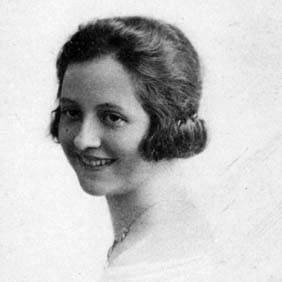
| Marie-Louise Jacotin (1905–1972) A mathematician specializing in algebra, she was the first of five women to serve as president of the SMF, as well as the first woman to obtain a university chair in France. She contributed to the popularity of algebra, and her book Leçons d'algèbre moderne (Lessons in Modern Algebra) was widely distributed. She was also interested in the place of women in mathematics and science, and published articles on famous female scientists. |

| Paulette Libermann (1919–2007) A mathematician specializing in differential geometry, she was the first former student of theÉcole normale de Sèvres to defend a thesis in mathematics and hold a chair in higher education. A specialist in differential geometry and symplectic geometry, her work focused in particular on jet theory, higher-order connections, quasi-parallelism, and Libermann foliation (symplectically complete foliation). |
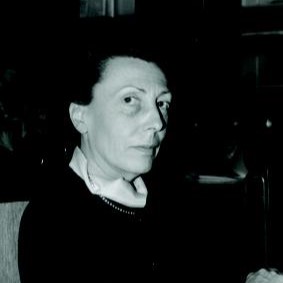
| Edith Mourier (1920–2017) Mathematician specializing in probability. She is particularly known for the Fortet-Mourier distance, which is used to quantify the difference between two measurements. She collaborated with a small group of researchers working on probability calculations, a field that was somewhat neglected in mathematical research at the time. She was also a researcher and research director at the CNRS. |

| Michelle Schatzman (1949–2010) A mathematician specializing in applied mathematics, she combined research (as a research director at the CNRS) with teaching (as a professor at Claude Bernard University Lyon I). Over the years, she wrote more than 70 scientific articles, many of which are landmark publications that are still widely cited today. |

| Marie-Hélène Schwartz (1913–2013) A mathematician specializing in complex analysis and algebraic geometry, she focuses in particular on the study of spaces with singularities. Her work led her to define what is now known as the“M. H. Schwartz–R. MacPherson characteristic classes”. She is the author of several books on her research. She spent most of her career as a professor at the University of Lille until her retirement in 1983. |
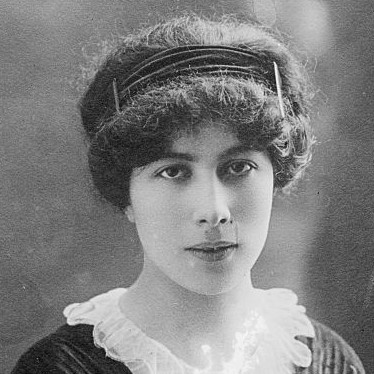
| Edmée Chandon (1885–1944) An astronomer, she was also the first French woman to obtain a doctorate in mathematical sciences in March 1930. She was also admitted to the French Mathematical Society in 1919. |