
Anna Korba receives the CNRS Bronze Medal for her work at the intersection of mathematics, statistics, and artificial intelligence
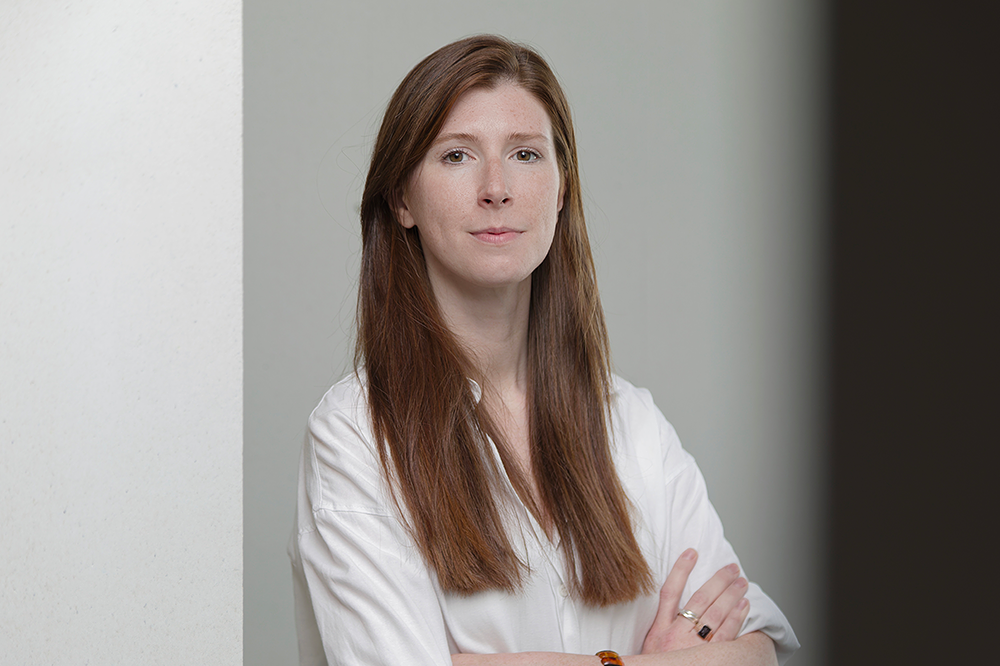
Anna Korba, a machine learning specialist at the Center for Research in Economics and Statistics (CREST)
“I became interested in mathematics at a fairly early age because I loved how it was both rigorous and creative,” recalls Anna Korba. After studying mathematics and statistics, notably at ENSAE and ENS Cachan, she completed a thesis on learning from preference data at Télécom Paris. She subsequently continued her research as a postdoc at University College London, within the Gatsby Computational Neuroscience Unit, before joining CREST in 2020.
Her work spans several disciplines, including mathematics, statistics, and artificial intelligence. “I am particularly interested in optimization problems on probability measure spaces, using optimization tools, optimal transport, and kernel methods, among others,” explains the researcher. In this context, she develops new algorithms and studies their convergence.
Her research has applications in machine learning, particularly in sampling, which enables predictions to be made while accounting for uncertainty. This is a particularly critical aspect in the practical application of machine learning models. Her work also has applications in generative models, which are capable of creating new data from a set of examples. These approaches open up new possibilities in many fields, such as computational biology and the creative industries.
These questions are at the heart of the OptInfinite project, for which Anna Korba received an ERC Starting Grant in 2025. The project aims to build a unified framework for designing and evaluating efficient sampling methods, particularly for “complex” probability distributions in high dimensions. Drawing notably on optimal transport, this project aims to provide new tools for comparing, manipulating, and generating data, with applications in both scientific modeling and artificial intelligence.
“I’m fortunate to have a lot of support from my colleagues and friends in the field. I’ve always learned so much from my collaborators, so I work in a particularly stimulating and supportive environment,” says the researcher, for whom the collaborative aspect of research is of fundamental importance. The bronze medal recognizes her overall contributions, as well as her strong commitment to the scientific community. She views this award as significant recognition of her work, as well as that of her colleagues. “It means a lot to me and motivates me to continue my research by exploring new ideas,” she concludes.