

Cristina Toninelli, winner of the CNRS Silver Medal for her work at the intersection of probability theory and statistical mechanics
A CNRS Research Director at the Center for Research in Decision Mathematics (CEREMADE)
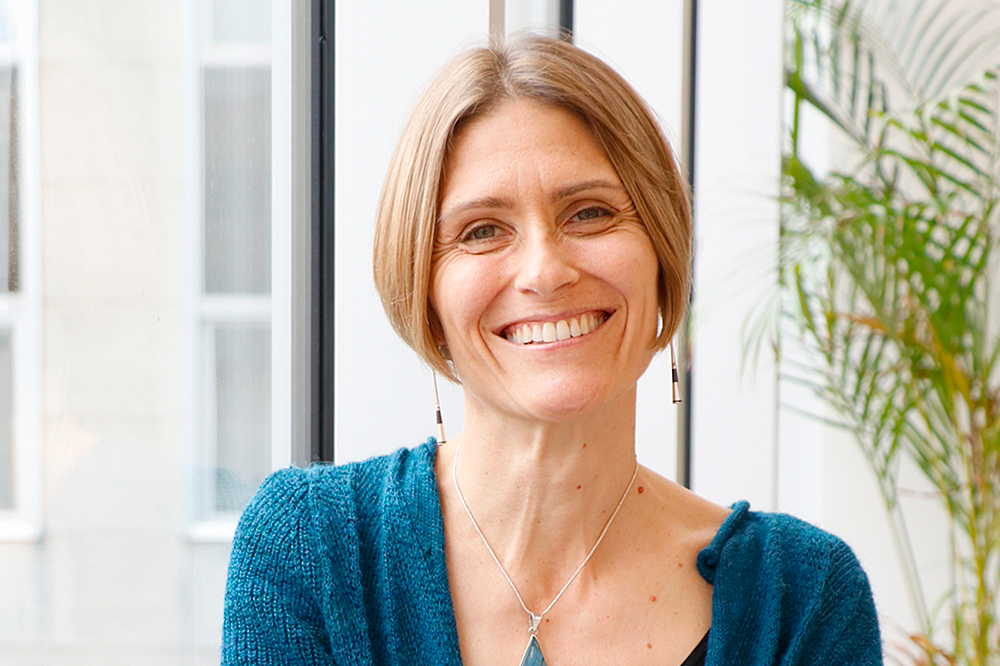
After studying theoretical physics at La Sapienza University of Rome, Cristina Toninelli turned to mathematics, focusing on problems at the intersection of probability theory and statistical mechanics. This led her to join the École normale supérieure de Paris as a postdoctoral researcher, before joining the CNRS in 2006 at the Laboratory of Probability, Statistics, and Modeling
Her work focuses on interacting particle systems (IPS), which model the random evolution of a large number of particles. She is particularly interested in kinetic constraint models (KCM), introduced in physics in the 1980s to understand the liquid-glass transition. These models exhibit slow dynamics that are difficult to analyze and remained poorly understood for a long time. “One of my first results was to rigorously demonstrate that certain conjectures proposed in this context were incorrect and due to simulation artifacts,” explains the researcher. This result marks a turning point in the field and paves the way for the mathematical study of these models.
Together with her students and colleagues, she has developed mathematical tools to capture the mechanisms underlying the abnormally slow dynamics of KCMs, establish the relevant timescales, characterize their universality classes, and highlight connections with other fields, notably bootstrap percolation. “Over the years, I have thus forged connections between specialists from different fields around KCMs: probabilists, combinatorialists, physicists—both theorists and experimentalists,” explains Cristina Toninelli.
The CNRS Silver Medal recognizes her work and her strong commitment to the scientific community, an honor the researcher accepts with deep emotion. “I would like to dedicate this medal to my students: without their enthusiasm, their ideas, and their energy—and without the constant challenge of proposing thesis topics that match their talent—I could never have come this far,” she concludes.