
Open science, driving force for eco-designed aircraft
How can open science be integrated into doctoral research? Why is it essential for research in mathematics?
Part of the second National Plan for Open Science, the Open Science Thesis Award aims to encourage and highlight open science practices among doctoral students. The award recognizes theses in which open science practices have contributed to the quality of the scientific work.
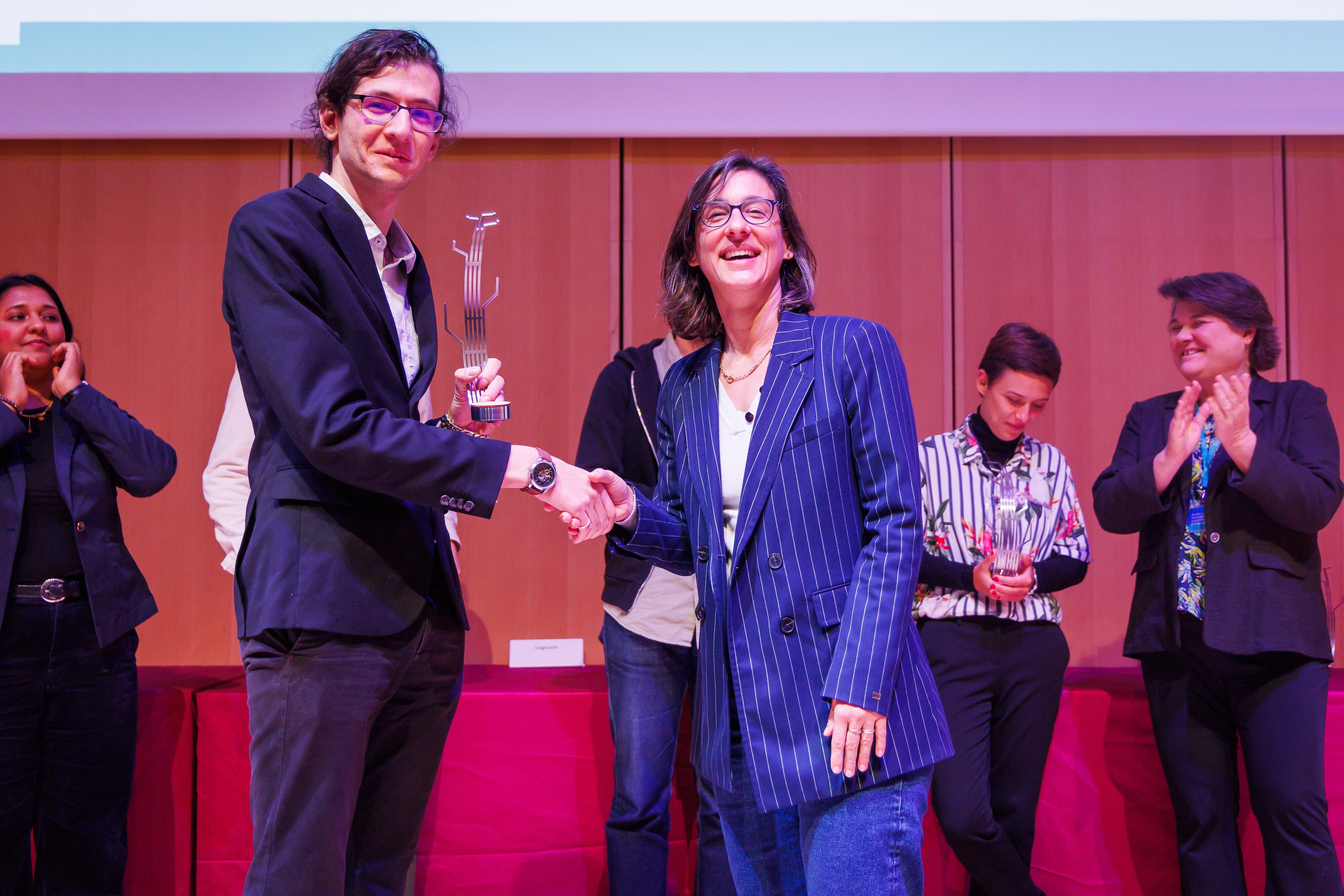
Paul Saves is the winner of the 2025 Open Science Thesis Award in the “Science and Technology” category for his thesis in mathematics.
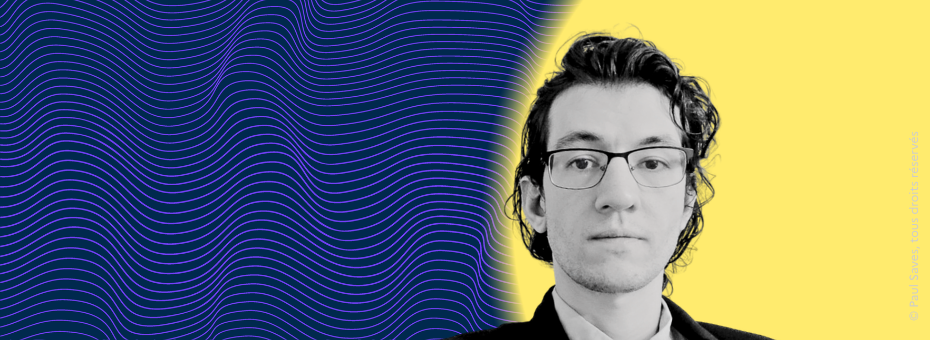
- Thesis title: “Large-scale multidisciplinary optimization for eco-design of aircraft in the preliminary design phase”
- Institution awarding the degree: Institut supérieur de l'aéronautique et de l'espace (ISAE)
- Doctoral school: Doctoral School of Mathematics, Computer Science, and Telecommunications of Toulouse
- Thesis supervisors: Nathalie Bartoli, Youssef Diouane
- Current position: Postdoctoral researcher at the Toulouse Institute for Research in Computer Science (IRIT)
Could you tell us about your thesis?
My thesis addresses a major ecological challenge: designing the carbon-free aircraft of tomorrow. It is a complex, multidisciplinary system in which everything is interconnected: changing the shape of a wing immediately affects its weight (structure) and drag (aerodynamics). To find the best compromise, you need to be able to model these interactions and optimize hundreds of different variables: this is the challenge of “high dimensionality.”
However, testing each combination using numerical simulations would take an infinite amount of time. My work consisted of developing Bayesian optimization methods capable of breaking this “curse of dimensionality.” By using simplified mathematical models (or surrogate models) to intelligently guide the research, my algorithms make it possible to identify the optimal architectures with a minimum of calculations, even in the presence of both continuous and discrete variables.
How did you get into mathematical research?
It was the desire to apply mathematical rigor to real-world engineering problems that guided my choice of post-baccalaureate studies. This led me to enroll at the National Institute of Applied Sciences (INSA) in Toulouse, which, along with the CNRS and four other institutions, is one of the partners in the Toulouse Institute of Mathematics (IMT), a mathematics research laboratory. I obtained my degree in Mathematical Engineering there, while also completing a Master's degree in Operational Research Mathematics at the University of Toulouse.
My interest in research was confirmed during a memorable experience in Siberia, at the University of Novosibirsk. There, I worked on signal and image analysis. It was this immersion that made me want to move from data observation to decision-making, leading me to optimization. This journey culminated in my thesis topic: combining machine learning via Gaussian processes and Bayesian optimization for the multidisciplinary design of complex systems.
When did you discover the open science movement?
I discovered open science out of structural necessity, inherent to my areas of research, particularly in order to connect multidisciplinary analysis and optimization to model-based systems engineering. These approaches rely entirely on the ability to enable dialogue between heterogeneous design processes. However, working on a daily basis with researchers such as Vincent-Nam Dang, within my team at the Institut de Recherche en Informatique de Toulouse (IRIT), made me realize that interoperability cannot be decreed: it must be built. As his work shows, while closed standards can be used to build ad hoc bridges, the cost of scaling them up quickly becomes prohibitive. This is why open standards are essential to prevent data and processes from remaining locked in hermetic disciplinary silos.
I have therefore integrated open science as a fundamental building block of our engineering processes. To echo the vision of Yvon Maday, mathematicians must be the ones who build bridges between disciplines. In concrete terms, this involves the development of free community software (such as SMT 2.0) and systematic dissemination on HAL and arXiv. This is the only way to ensure that our work is not simply a black box, but a verifiable and reusable link in a global design chain.
You are the winner of the 2025 Open Science Thesis Award, in the “Science and Technology” category. How did you hear about the 2025 Open Science Award?
This initiative is part of a collective effort. I currently work on the development team for GAMA, a simulation platform that received an honorable mention in the 2022 Open Science Award for Free Software. Working in this environment naturally encouraged me to respond to institutional calls for proposals.
For me, applying was a way to highlight the reality of the behind-the-scenes work involved in free software. Unlike traditional science, where work often stops once the article is published, open source code requires a long-term investment. It is a constant commitment: user feedback must be processed, functional updates must be integrated, and security and interoperability must be ensured. This award is important because it finally recognizes the value of this ongoing maintenance, which is essential for science to remain reproducible in the long term.
What were the main difficulties you encountered during your thesis?
The first difficulty was mathematical and structural in nature. A modern aircraft is not an isolated object, it is a system of systems. To optimize it, you have to manipulate complex structured databases containing hierarchical variables: the choice of an engine determines the existence of other variables, creating a decision tree. Conventional algorithms are unable to handle this shifting structure.
The second difficulty was reconciling this complexity with industrial reality. In aeronautics, performance data and optimization processes are strategic industrial secrets. Therefore, not everything can be made open source.
On the contrary, what pleasantly surprised you?
What surprised me most was the camaraderie and spontaneous sharing that reigns in open science. This opened up unexpected opportunities far beyond my usual circle in mathematics, creating direct links with mechanics (via the CNRS's Institut Clément Ader) and computer science (with Polytechnique Montréal).
It's a tremendous dynamic of mutual support that has been sustained by large-scale European projects such as AGILE 4.0 and COLOSSUS, as well as by the technical resources of ONERA and ISAE-SUPAERO, which are essential for carrying out this collaborative research.
Do you have any advice on open science for your colleagues who want to get started?
Don't wait for perfection to get started! An imperfect but accessible resource is infinitely more useful than a perfect result that remains locked behind a paywall. See open science as a global approach that goes beyond a simple article. Make it a habit to share your work and think about interoperability from the outset. It is by agreeing to share these building blocks, however modest, that we collectively make research more robust, more reusable, and more visible.
What are your plans for the future?
Currently a postdoctoral researcher at IRIT, I am working at the interface between mathematics and computer science on multi-agent systems. I continue to explore the hybridization of artificial intelligence and optimization to solve complex problems in various fields such as agroecology, the circular economy, and anomaly detection.
Alongside my research, I'm actively involved in promoting open science at the local level, particularly through roundtable discussions, to encourage the next generation of researchers to take the plunge.