IRL LaSol, a mathematical bridge between France and Mexico
Created in 2017 as an extension of an International Associated Laboratory (LIA) established in 2009, the Franco-Mexican International Research Laboratory (IRL) Laboratorio Solomon Lefschetz (LaSol) exemplifies the close scientific cooperation between France and Mexico. Based in Cuernavaca, it is structured around eight main mathematical areas and helps to support mobility and collaboration between researchers from both countries.
From LIA to IRL: structuring and expanding Franco-Mexican cooperation
Scientific ties have long existed between France and Mexico, particularly in geometry, singularity theory, probability, and dynamic systems. A new turning point came in 1998 with the creation of a mathematics unit at the National Autonomous University of Mexico in Cuernavaca. This marked the beginning of a year rich in mathematical activities, bringing together many French mathematicians. “Jose Seade and Alberto Verjovsky played an important role in this desire to bring France and Mexico closer together mathematically,” explains Laurent Meersseman, professor, researcher, and director of the Laboratoire Angevin de Recherche en Mathématiques (Angers Mathematics Research Laboratory) and current deputy director of IRL LaSol. “Alberto Verjovsky, who was a professor in Lille, had the necessary contacts to make this happen.”
This momentum led to the creation in 2009 of a CNRS International Associated Laboratory in Cuernavaca, co-directed by Jose Seade for Mexico and Hamish Short for France. The transformation into an International Research Laboratory, at the time called a Joint International Unit, took place in 2017 as a logical next step. The ambition was clear: to go beyond the original geographical base and reach out to all the major universities and research centers in the country, such as the National Autonomous University of Mexico (UNAM), the Center for Research and Advanced Studies of the National Polytechnic Institute (CINVESTAV), and the Center for Research in Mathematics (CIMAT).
The laboratory focuses on eight major areas, reflecting the wealth of scientific collaboration between the two countries:
- Algebra;
- Analysis and PDE;
- Discrete mathematics and combinatorics;
- Geometry;
- Probability;
- Dynamic systems;
- Singularities;
- Topology.
The stated objective of IRL LaSol is to support any new collaboration between France and Mexico, in order to promote exchanges and dynamic collaboration. “The ambition is to nurture all areas of mathematics where high-level scientific cooperation between France and Mexico is taking place,” explains the current deputy director.
Testimonial from Pavao Mardesic, senior lecturer at the Burgundy Institute of Mathematics
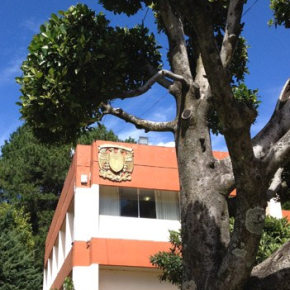
I am on a six-month CNRS delegation to the LaSol Laboratory in Mexico City, currently halfway through my stay. I work at the Institute of Mathematics located on the campus of the National Autonomous University of Mexico (UNAM).
I have already made many scientific trips, of varying lengths, to Mexico. These trips have always been very enriching scientifically, but also culturally and personally. I have never been to a place with so many well-trained and motivated young people. I have supervised two theses by Mexican students whom I met there, and both experiences have been very rewarding. One of my former students is currently working at the UNAM Institute of Mathematics and the other is doing postdoctoral research at the Unit of Pure and Applied Mathematics in Lyon.
Scientific life here is rich. Since the beginning of my stay, a series of 10 lectures by Yu. S. Ilyashenko, a leading figure in holomorphic foliation theory, has been organized around Hilbert's 16th problem. The lectures were aimed at students and researchers, and around 50 people actively attended the presentations. They were followed by a week of research presentations. In this context, I presented recent work carried out with Mexican colleagues, and a colleague also presented work that we are currently working on. The laboratory organizes weekly seminars and colloquiums, where the atmosphere is always pleasant, almost family-like.
Facilitating collaboration and building a scientific network
According to Laurent Meersseman, the IRL “acts as a facilitator of exchanges.” The various actions carried out illustrate his words: co-financing of conferences in Mexico with the presence of French speakers, hosting French researchers at the IRL, stays in France for Mexican researchers in red positions, etc.
The laboratory intends to continue these activities and expand them, not only with France but also with the various IRLs in America, with which contacts have been increasing in recent years. The director of IRL LaSol, Geronimo Uribe, participated in the 25th anniversary of IRL CMM in Chile and the inauguration of IRL IFUMI in Uruguay. “Ultimately, the idea is to set up the Matham federation of IRLs in the Americas, which will be created in early 2026 and will enable joint actions and the sharing of experience,” summarizes Laurent Meersseman.
In the short term, the stated priority is therefore to complete the mapping of Franco-Mexican cooperation in mathematics, identifying existing collaborations in order to better support the researchers involved. In the medium term, the IRL's management aims to set up ongoing events with the various players, such as a Franco-Mexican mathematics conference or the organization of joint thematic semesters, in order to consolidate the scientific community and increase its visibility.