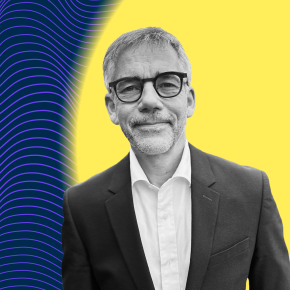
Mathematician Mattias Jonsson has been appointed CNRS Fellow Ambassador 2026
Mattias Jonsson, based at the University of Michigan, has joined the CNRS Fellow Ambassador. With this fourth cohort, the CNRS Fellow Ambassador programme reaffirms its ambition: to make the CNRS a hub for major international scientific communities.
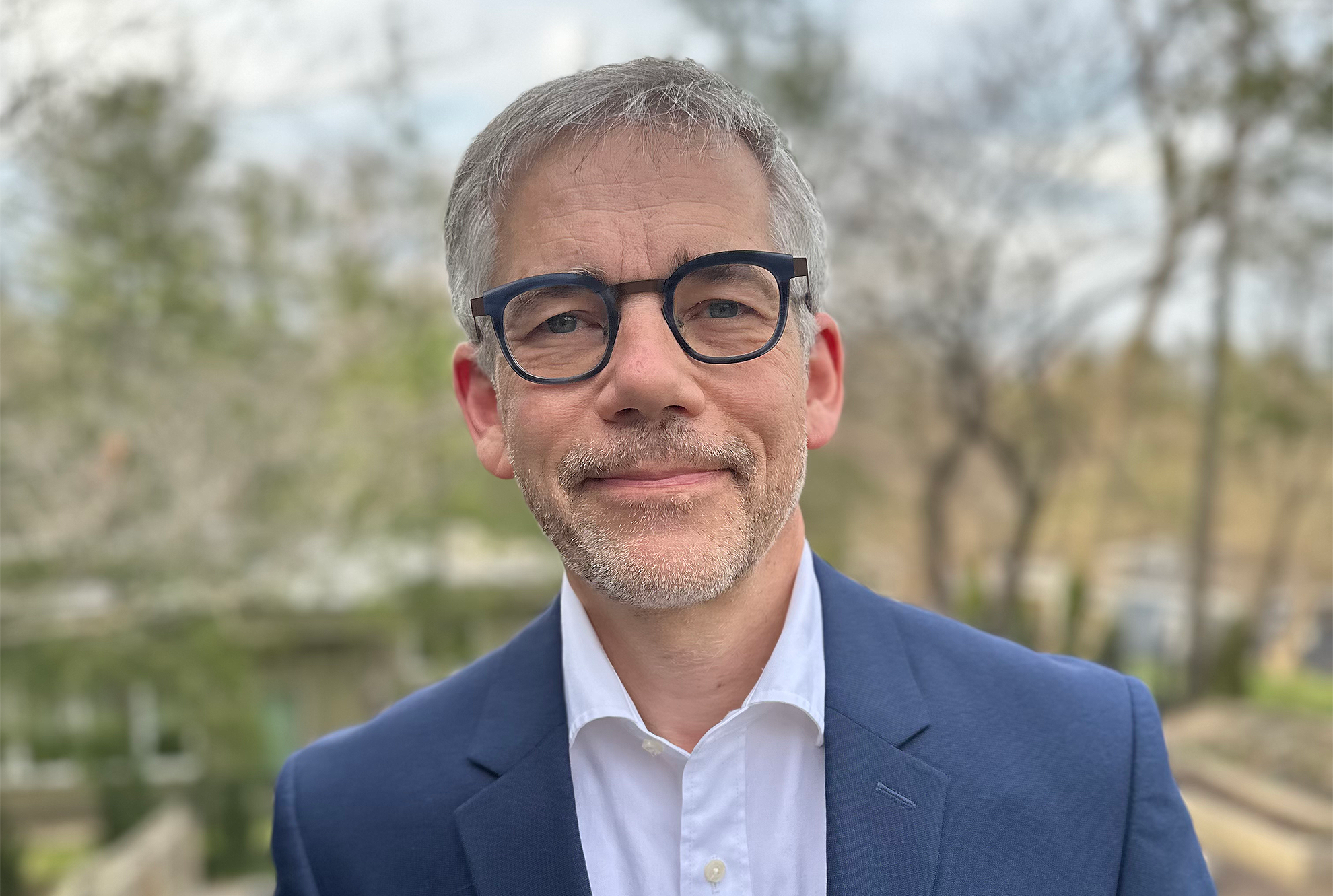
After completing a PhD in mathematics at the Royal Institute of Technology (KTH), Stockholm, in 1997, Mattias Jonsson has spent most of his career at the University of Michigan, including a period as a professor at KTH, and visiting positions at Institut des Hautes Études Scientifiques, École Polytechnique, Chalmers University of Technology, and Sorbonne Université. He became a Full Professor in 2009, is a Fellow of the American Mathematical Society, and was a Simons Foundation Fellow in 2023–2024.
Originally focused on higher-dimensional complex dynamics, his research has more recently shifted toward non-Archimedean techniques in complex geometry and dynamics, with a focus on Berkovich spaces. He is the author of over sixty research articles in mathematics, including several in top-tier journals, and has supervised a dozen PhD students. In collaboration with Sébastien Boucksom, he has employed a non-Archimedean point of view to make important advances on the Yau–Tian–Donaldson conjecture, contributing to the understanding of stability conditions and canonical metrics on complex manifolds.
Could you start by introducing yourself and your career?
I'm from Sweden, with a BSc from the University of Gothenburg and a PhD from the Royal Institute of Technology in Stockholm. Since then, I have spent most of my career at the University of Michigan, with some periods in France and Sweden. French mathematicians have played a crucial role throughout my career, from the late Nessim Sibony helping me during my PhD studies, to deep collaborations with Charles Favre and Sébastien Boucksom.
What are your research interests and what are you currently working on?
My early work was in complex dynamics, studying iterations of rational selfmaps of complex manifolds. In the early 2000s, Charles Favre and I stumbled upon a way to use non-Archimedean methods to study certain problems in complex dynamics, e.g. the speed of convergence to infinity of orbits of polynomial dynamics in dimension two. Since then, the use of non-Archimedean tools, such as Berkovich spaces, plays a crucial role in my work. In collaborations with Charles Favre and, especially, Sébastien Boucksom, I have developed foundational tools, such as potential theory on Berkovich spaces, and we have used these to prove versions of the Yau-Tian-Donaldson conjecture in complex geometry.
What is your connection with the CNRS?
I have a strong connection to France in general and French mathematics in particular, where the CNRS of course plays a crucial role. My two main collaborators over the years, Charles Favre and Sébastien Boucksom, are both research directors at the CNRS, and during the summers of 2011 and 2012 I was visiting the École Polytechnique, with funding from the CNRS.
What does this appointment mean to you?
Given my long-standing ties to French mathematics, it is a tremendous honor to be selected as CNRS Fellow-Ambassador. Not only does it allow me to continue my existing collaborations, but also to expand into new areas. I look forward to spending more time in France over the next three years, and to developing new collaborations.
What are your expectations regarding this role?
Over the next three years, I plan to spend at least three months in France, with an increasing presence in years two and three. I will be primarily based at Institut de Mathématiques de Jussieu-Paris Rive Gauche in Paris, while also visiting other centers such as those in Toulouse and Bordeaux. I look forward to consolidating my existing collaborations and developing new ones within the French mathematical community.
I also hope to contribute more actively to scientific exchange, for example by organizing a focused workshop and by facilitating visits of faculty and students to the University of Michigan. Supporting interactions with younger researchers will be an important aspect of this.
Scientifically, I expect this period to open new directions at the interface of complex geometry and non-Archimedean methods, while continuing ongoing projects. More broadly, I see this appointment as an opportunity to strengthen long-term connections between research groups in France and the United States, and to increase the visibility of these interactions within the international mathematical community.