Mathematics for healing
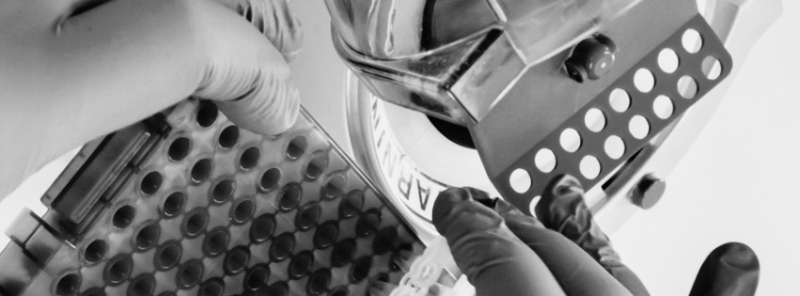
Mathematics, a tool for “better healthcare”?
The abundance of data today represents a tremendous opportunity to change practices. For example, this data can be used to measure the effect of vaccines, generate models to better understand degenerative diseases, and accurately measure physical changes. Mathematics therefore plays a vast and decisive role in healthcare.
Find out more: When mathematics heals medicine - Polytechnique insights
How did statistics help Florence Nightingale save lives?
Florence Nightingale demonstrated that it wasn't just medicine that could cure the sick: mathematics could too! During the Crimean War, she highlighted the correlation between poor sanitary conditions and soldier deaths using diagrams, a real innovation at the time. And by carefully analyzing this data, she even recommended reforms in hospital hygiene, which drastically reduced the mortality rate in military hospitals.
Find out more: The origins of graphs: how statistics were turned into images - France Culture
How does mathematics help us understand cancer?
Using mathematical models, mathematicians are able to understand how tumors grow. More specifically, equations known as “diffusion equations” can be used to model the behavior of cancer cells. This enables doctors and biologists to develop new treatments and provide better care for patients.
Find out more: How can mathematics help us understand tumor growth? - The Conversation
Will mathematics save us from the next epidemic?
You will surely not be surprised to learn that mathematics can also be used to model the overall evolution of an epidemic, but you will certainly be surprised to learn that it can help combat it! By modeling factors that impact transmission (social interactions, room ventilation, etc.), mathematicians identify specific situations where the spread of a virus is most significant. This enables them to propose organizational measures to limit the spread (schedules, bed layout in hospitals, etc.).
Find out more: Mathematicians on the front line of #COVID19 | CNRS report
How does mathematics increase the effectiveness of ultrasounds?
Mathematics is necessary to perform augmented ultrasound scans. Algorithms enable real-time analysis of ultrasound data to help doctors better detect abnormalities and thus provide better care for patients.
Find out more: Sonio: augmented ultrasound for obstetrics - CNRS Innovation
How does mathematics explain the transmission of genetic diseases?
The answer lies in this new question: are you familiar with Hardy-Weinberg's law? It is a model used to study genetic diseases. More specifically, it allows probabilistic predictions to be made that are valid on a population scale, thereby helping us understand how genetic diseases spread according to genetic and environmental factors!
Find out more: Hardy-Weinberg, probability in the service of genetics | The Great Adventure of Math | Lumni