20th anniversary of the IRL Jean-Christophe Yoccoz in Rio and birth of the MATHAM federation
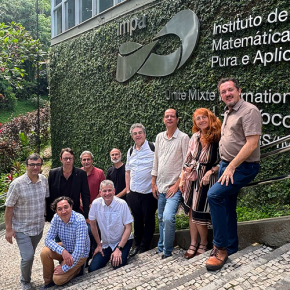
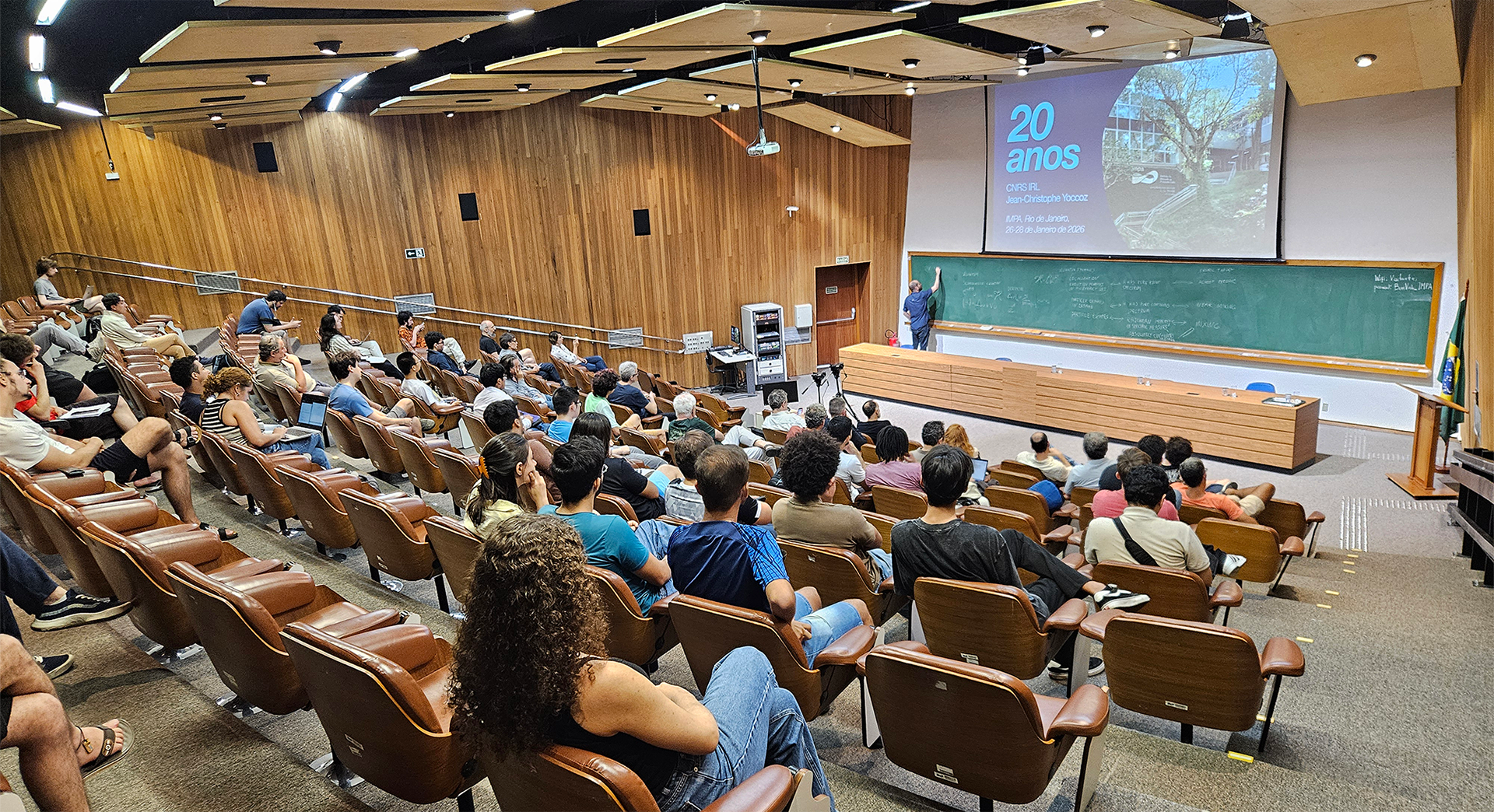
From January 26 to 28, 2026, the Institute of Pure and Applied Mathematics (IMPA) and the CNRS celebrated the 20th anniversary of the Jean-Christophe Yoccoz International Research Laboratory (IRL) in Rio de Janeiro. This anniversary also marked the launch of the FRA MATH-AMERICAS (MATHAM) federation, which brings together and unites the six CNRS mathematics IRLs located on the American continent.
Long-standing scientific cooperation
Created in 2005 on the initiative of mathematician Christian Peskine, the Jean-Christophe Yoccoz IRL is part of a long-standing scientific tradition between France and Brazil. The first collaborations began in the late 1970s with the arrival at IMPA of young French mathematicians, including Étienne Ghys, Jean-Christophe Yoccoz, Patrick Cattiaux, Christian Bonatti, Emmanuel Ulmo, and Pierre Mathieu. As Claudio Landim, current director of the IRL, points out, “these visits laid the foundations for scientific collaborations that have grown stronger over the years, making France Brazil's main scientific partner in mathematics.”
The IRL was created to structure this existing dynamic, while responding to a twofold priority: to welcome young researchers and to attract specialists in fields that are still underdeveloped in Brazil. According to the director, there are three typical profiles of researchers welcomed to the laboratory: scientists who have held administrative positions and wish to return to research in a stimulating environment conducive to the development of their projects; individuals with a personal scientific project who wish to carry it out far from the academic constraints of their positions; and researchers engaged in scientific collaborations with Brazil who wish to strengthen these partnerships on site.
This diversity of profiles reflects both the opportunities offered by the IRL and the challenges it must continue to address in order to structure its scientific activity, which is currently organized around thirteen research themes
Testimonial from Thierry Combot, professor and researcher at the Burgundy Institute of Mathematics
This year, I am part of a CNRS delegation, assigned for one semester to the Jean Christophe Yoccoz IRL, located at IMPA in Rio de Janeiro, Brazil.
During my habilitation, I became increasingly interested in foliations, a field in which Jorge Vitorio Pereira is a specialist, and this delegation allows me to collaborate with him and his students. IMPA is a large laboratory and one of the most renowned in Latin America, representing many areas of mathematics. With around 100 permanent staff and a large number of students, I can also interact with other groups here, particularly in dynamic systems, algebra, abelian varieties, and much more. Numerous seminars are held every week, allowing me to discover new topics, and I have had the opportunity to present my work at these seminars.
This year, the IRL celebrated its 20th anniversary, and during the conference in its honor, I saw that many French people interact with the IMPA, which is easy to guess from the fact that French is often heard in the corridors. So much so that a conference in honor of Frank Loray from Rennes was organized here, and on this occasion, I was able to meet up with many of my French colleagues.
Needless to say, being located in the southern hemisphere, we enjoy a very pleasant summer here, in contrast to the French winter at the same time of year, and far from splitting the academic year in two, IMPA remains very active during the summer with summer courses and the arrival of many students for this occasion.
Twenty years on: celebrating, adapting, and preparing for the future
The celebration of the IRL's 20th anniversary brought together many prominent figures from the scientific and institutional worlds. The President and CEO of the CNRS, Antoine Petit, the Director of the Insmi, Christophe Besse, and the Consul General of France in Rio de Janeiro, Eric Tallon, were welcomed by the Director General of the IMPA, Marcelo Viana, his Deputy Director Jorge Vitório Pereira, and Claudio Landim, Director of the IRL.
Two decades after its creation, the IRL is now operating in a profoundly changed environment, particularly since the Covid-19 pandemic. “Air travel is now often avoided, short stays are becoming rare, and videoconferencing is preferred,” observes Claudio Landim. This development has made it more difficult to organize short-term Franco-Brazilian scientific meetings, prompting the IRL to rethink its model. The laboratory is now focusing on a strategy based more on long-term delegations and a stronger commitment to young researchers.
The stated objective is clear: to consolidate long-term collaborations and structure scientific trajectories after the thesis. With this in mind, a postdoctoral program dedicated to young researchers working in France was created at IMPA in 2024. This initiative aims to consolidate scientific ties between the two countries and prepare the next generation of collaborators. “This approach will not only maintain the Franco-Brazilian scientific dynamic, but also adapt it to new realities while ensuring its sustainability,” concludes the director.
Although the IRL has “relatively few links with other CNRS units in America,” according to Claudio Landim, the desire to strengthen these connections has gradually emerged as a strategic issue. It is with this in mind that the MATHAM federation was created, signed on the occasion of this anniversary.
MATHAM: structuring mathematics across the Americas
These days of celebration also marked the official launch of the FRA MATH-AMERICAS federation, or MATHAM, which brings together the six CNRS mathematics research laboratories located on the American continent: the CRM-CNRS international laboratory (Canada), the CNRS-PIMS international laboratory (Canada), the Center for Mathematical Modeling (Chile), the Solomon Lefschetz Laboratory (Mexico), the Franco-Uruguayan Institute of Mathematics and Interactions (Uruguay), and, of course, the Jean-Christophe Yoccoz International Research Laboratory.
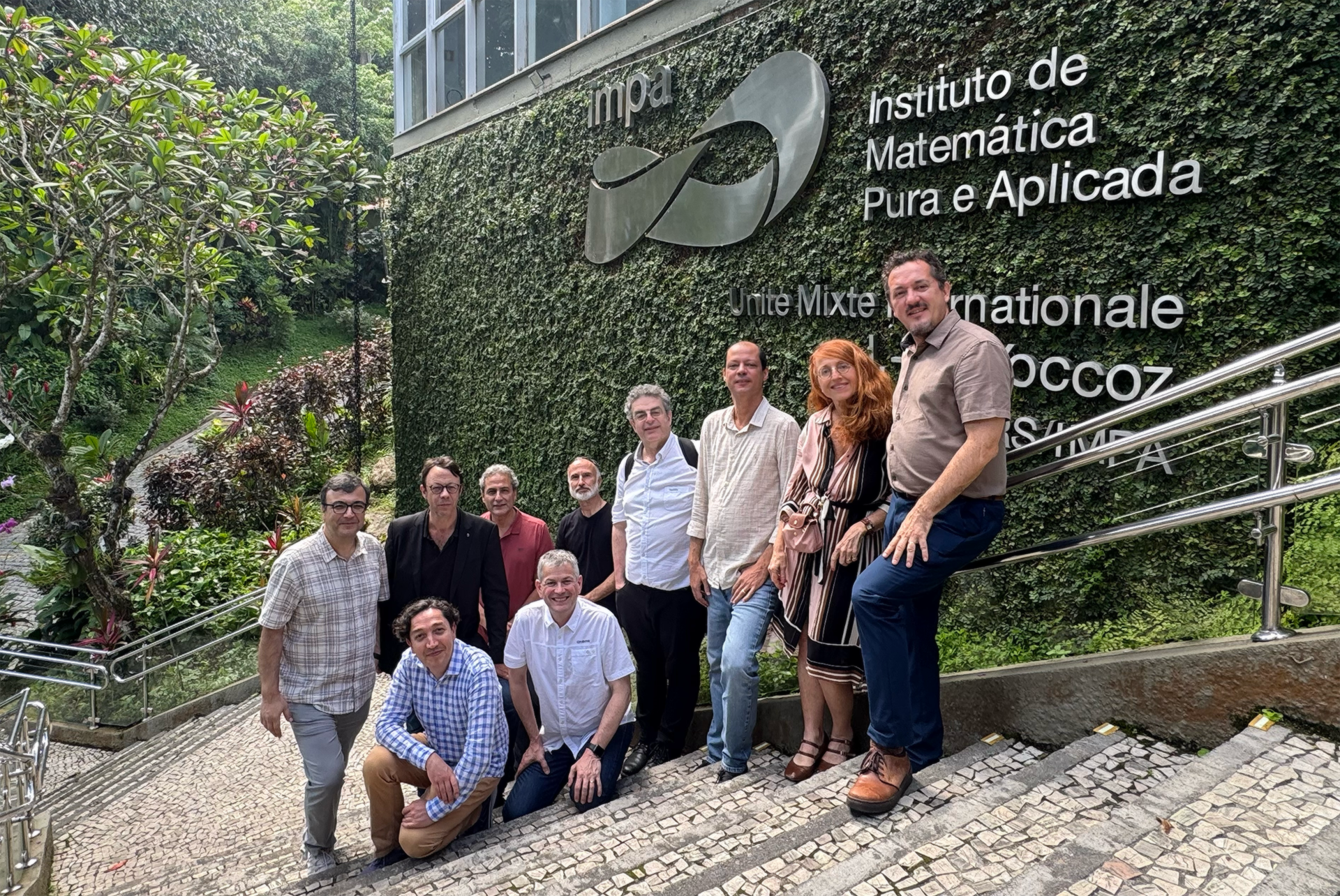
“MATHAM was born out of sustained discussions between several successive directors of the IRL CNRS in the Americas,” explains Alejandro Maass, director of the federation. “The federation aims to become a network for coordinating and proposing joint actions for its constituent units,” thereby strengthening cooperation, developing joint projects, and improving the visibility and attractiveness of French mathematics and the IRLs that are part of the federation among doctoral students and postdoctoral researchers. Its objectives include implementing joint actions in training, scientific outreach, and fundamental and applied research, as well as sharing experiences on relations with other sciences and with the socio-economic world.
The federation also intends to "develop a common vision and implement actions to meet the challenges facing mathematics in an era of technological, climatic, social, and other transitions. Joint annual conferences, support for short-term research visits, the creation of postdoctoral positions involving substantial stays at IRLs, and specific measures to promote the mobility of women in mathematics are among the first priorities announced.